
Managing bladder irrigation in busy wards
Postoperative bladder irrigation is a routine part of care on urology wards. It often runs for hours, and sometimes even for several days. For nursing professionals, it is a standard procedure—yet one that runs alongside many other tasks and still requires continuous attention.

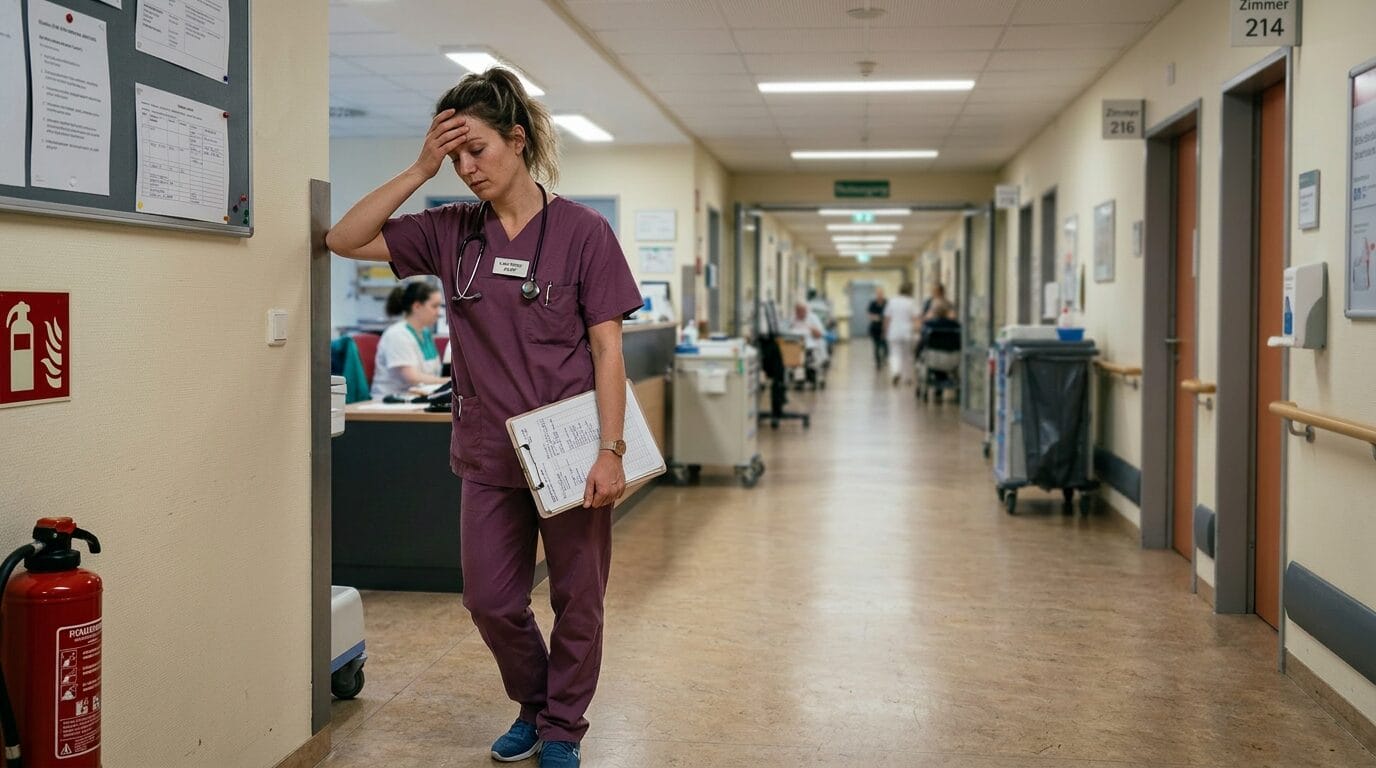
Reality: Everything happens at once
Anyone working on a urology ward is familiar with these situations.
- An irrigation needs to be checked.
- At the same time, another patient requires a bag change.
- A patient presses the call bell.
- Medication administration needs to be prepared.
- And a team meeting is scheduled in just a few minutes.
All of these are tasks the staff are well trained to handle. The challenge arises when they all happen at the same time.
A single bladder irrigation is rarely the issue. The real challenge is safely keeping track of several irrigations running in parallel.
The Real Effort Happens in the Mind
Nursing often means constantly switching between situations. No sooner has one task been checked than the next one arises. And in the background, there is always an ongoing mental loop:
- Where do I need to go next?
- What must I not lose sight of?
- What has changed?
Many nurses know this feeling well: it’s not the individual task that is demanding—it’s the constant switching between situations. This continuous mental tracking is what often makes the day more exhausting than it appears from the outside.
The workload on the ward rarely stems from individual tasks, but rather from many small shifts in attention throughout the day.
What Actually Helps in Practice
In most cases, sufficient information is available on the ward. The challenge lies in interpreting it correctly at the right moment.
- Which irrigation is running smoothly?
- Where is attention actually needed right now?
- What can safely wait a little longer?
These assessments often happen on the fly, while the next task is already waiting. When clarity comes faster, workflows become smoother. Nurses spend less time mentally sorting priorities and can act more directly.
Visibility as Support in Daily Nursing Practice
When it is immediately clear what is stable and where attention is required, daily work changes noticeably. Many processes become easier:
- fewer “just-in-case” checks
- less back-and-forth walking
- less frustration from missed bag changes
- faster prioritization
- earlier detection of changes
- reduced need to mentally track individual patients
Visibility does not replace nursing care. But it removes part of the constant mental coordination. This is where digital solutions can support clinical practice—by making this overview more readily accessible in everyday workflows.
Visibility helps reduce both coordination effort and the mental burden of daily ward work.
Conclusion
Postoperative bladder irrigation illustrates well how nursing actually works in practice: it is rarely individual tasks that are difficult, but rather many things happening simultaneously.
When maintaining an overview becomes easier, workflows become calmer. Less needs to be held in memory, and less constant checking is required. This is exactly where digital support can make a difference.
Where visibility is present, the need for mental tracking decreases—and that is where meaningful relief in daily practice emerges.
Medical disclaimer
The content of this article is intended solely for general information about clinical workflows in urology. It does not constitute medical advice or clinical recommendations. Clinical decisions should always be based on applicable guidelines and the individual situation of the patient.
Author: Filax Medical Editorial Team
The Filax Medical editorial team develops content on clinical workflows, process optimisation and digital solutions in urology. Contributions are based on clinical practice insights, scientific literature and exchange with clinical partners.
Last updated: April 2026
--->