
Postoperative bladder irrigation in urology
A concise overview of postoperative bladder irrigation in urology, focusing on clinical workflows, indications, and common challenges in everyday clinical practice.
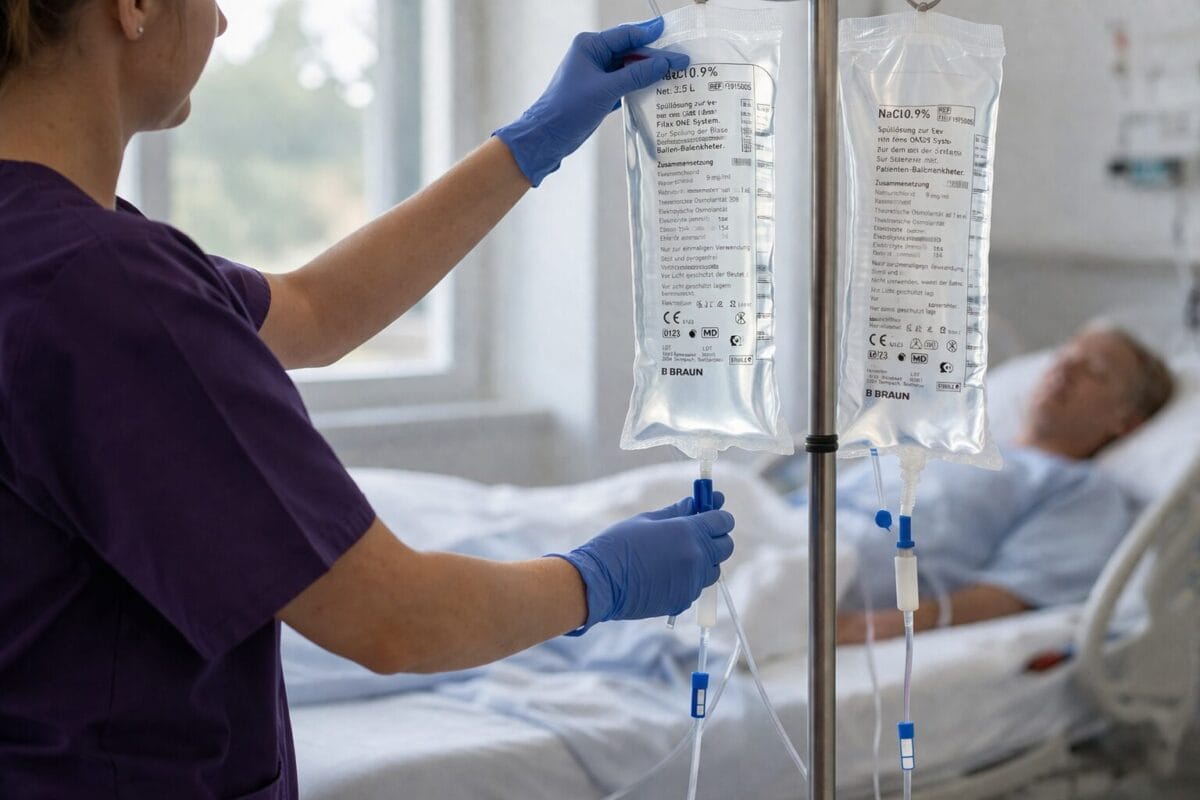
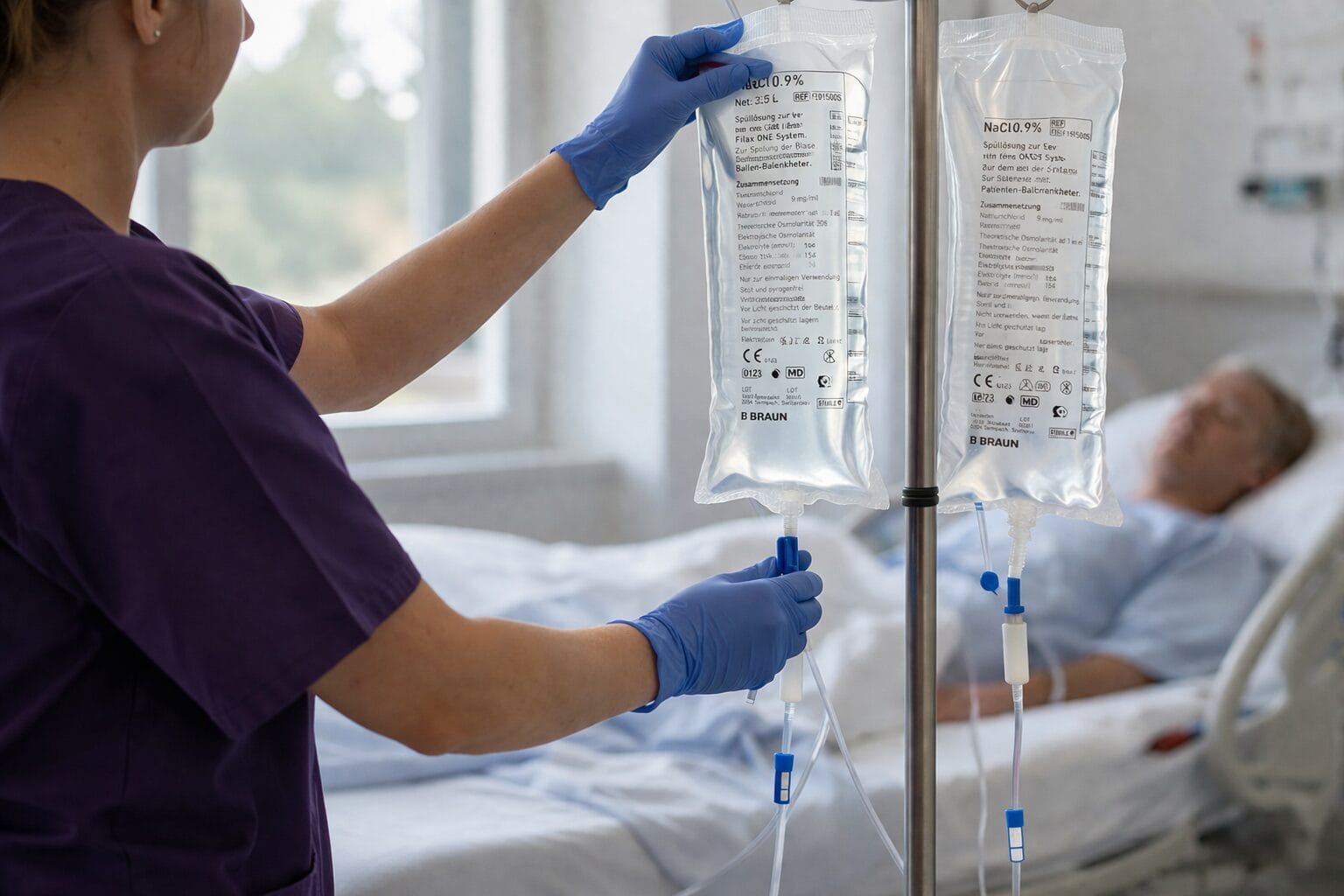
Postoperative bladder irrigation is a routine part of clinical practice in urology. Following procedures such as transurethral prostate surgery (e.g. TURP, ThuLEP, HoLEP) or transurethral resection of bladder tumours (TURB), it is widely established as part of standard postoperative management.
In daily clinical practice, however, its relevance extends beyond the technical procedure itself. As a continuous process, bladder irrigation requires regular observation, structured documentation and close coordination between nursing staff and physicians.
This combination of clinical routine and organisational workflow highlights an important reality of modern healthcare: quality of care depends not only on medical procedures themselves, but also on how clearly the surrounding processes are structured and managed.
The role of bladder irrigation in postoperative care
The purpose of postoperative bladder irrigation is closely linked to the clinical requirements following urological interventions.
Typical objectives include:
- Supporting the prevention of blood clot formation
- Maintaining catheter patency
- Flushing potentially free-floating tumour cells
- Supporting postoperative monitoring processes
- Enabling early recognition of postoperative bleeding
Because irrigation often continues for many hours or even several days, it requires ongoing attention within routine ward activities. This makes it clear that bladder irrigation should not be viewed as a single task, but rather as a continuous care process integrated into daily clinical workflows..
During postoperative bladder irrigation, irrigation fluid is continuously administered via a bladder catheter to maintain drainage, enable observation of postoperative bleeding and support structured postoperative monitoring.
Typical bladder irrigation workflow on the ward
In everyday clinical settings, managing bladder irrigation involves a series of recurring tasks. Alongside the clinical aspects, organisational coordination plays an equally important role.
Typical tasks include:
- Monitoring irrigation fluid and changing bags
- Checking and adjusting inflow and outflow
- Observing irrigation fluid colour
- Documenting fluid balance and irrigation characteristics
- Hygienic catheter care
- Communicating relevant observations within the care team
These activities take place alongside other routine nursing responsibilities and require effective coordination between nursing staff and physicians. Documentation is often still performed manually via entries in the hospital information system (HIS).
Particularly during periods of high workload, maintaining oversight of several ongoing irrigations at the same time can become challenging. Recognising relevant changes early requires both clinical attention and reliable access to information.
Documentation as a core element of the process
Accurate documentation is an essential part of postoperative bladder irrigation management. It provides the basis for clinical assessment and supports communication between nursing staff and physicians.
Typical documentation parameters include:
- Fluid input and output volumes
- Number of bag changes
- Duration of irrigation
- Notable events during irrigation
- Interruptions or adjustments of the irrigation
Depending on the clinical environment, this information may be recorded in different ways and across different systems, which can make maintaining a complete overview more complex.
Challenges in daily clinical practice
Postoperative bladder irrigation is not an isolated activity but part of a complex clinical environment. Typical challenges include:
Time requirements in nursing workflows
Regular checks and documentation require time, particularly when multiple patients require simultaneous monitoring.
Information transfer between shifts
During handovers, relevant information must be transferred reliably, as it may be safety-relevant for patients.
Clinical assessment based on snapshots
Clinical evaluation of irrigation does not rely on isolated observations but on understanding trends over time.
Overview across multiple patients
Especially in high-workload situations, maintaining an overview of all ongoing irrigations can be demanding.
Taken together, these factors demonstrate that effective bladder irrigation management depends not only on clinical execution but also on well-organised processes and clear interdisciplinary coordination.
Collaboration between nursing staff and physicians
Effective postoperative bladder irrigation requires close collaboration between nursing teams and physicians. While monitoring and day-to-day management are typically part of nursing responsibilities, medical decisions rely on the information generated during this process.
Important factors for effective collaboration include:
- Clear communication
- Traceable documentation
- Structured handovers
- Availability of relevant information
As healthcare continues to digitalise, new opportunities are emerging to support these organisational aspects of care. Digital tools may help structure process data, improve transparency and make relevant information more easily accessible within clinical teams.
Continuous clinical processes generate continuous information needs. The more transparently this information is available, the easier clinical organisation becomes.
Conclusion
Postoperative bladder irrigation remains an established and safety-relevant component of urological postoperative care. Beyond the clinical procedure itself, it also highlights the importance of structured workflows and effective interdisciplinary collaboration.
Key aspects include:
- Continuous execution of irrigation
- Structured documentation
- Interdisciplinary collaboration
- Organisation of ward workflows
Ultimately, quality of care is shaped not only by medical interventions, but also by the clarity and reliability of the processes that support them.
Medical disclaimer
The content of this article is intended solely for general information about clinical workflows in urology. It does not constitute medical advice or clinical recommendations. Clinical decisions should always be based on applicable guidelines and the individual situation of the patient.
Author: Filax Medical Editorial Team
The Filax Medical editorial team develops content on clinical workflows, process optimisation and digital solutions in urology. Contributions are based on clinical practice insights, scientific literature and exchange with clinical partners.
Last updated: March 2026
--->